Which problems don't belong to AI
AI is brilliant at the complicated. It is the wrong tool for the complex. A simple lens, borrowed from Harvard's Arthur Brooks, for deciding what to hand to a machine and what to keep with a person.
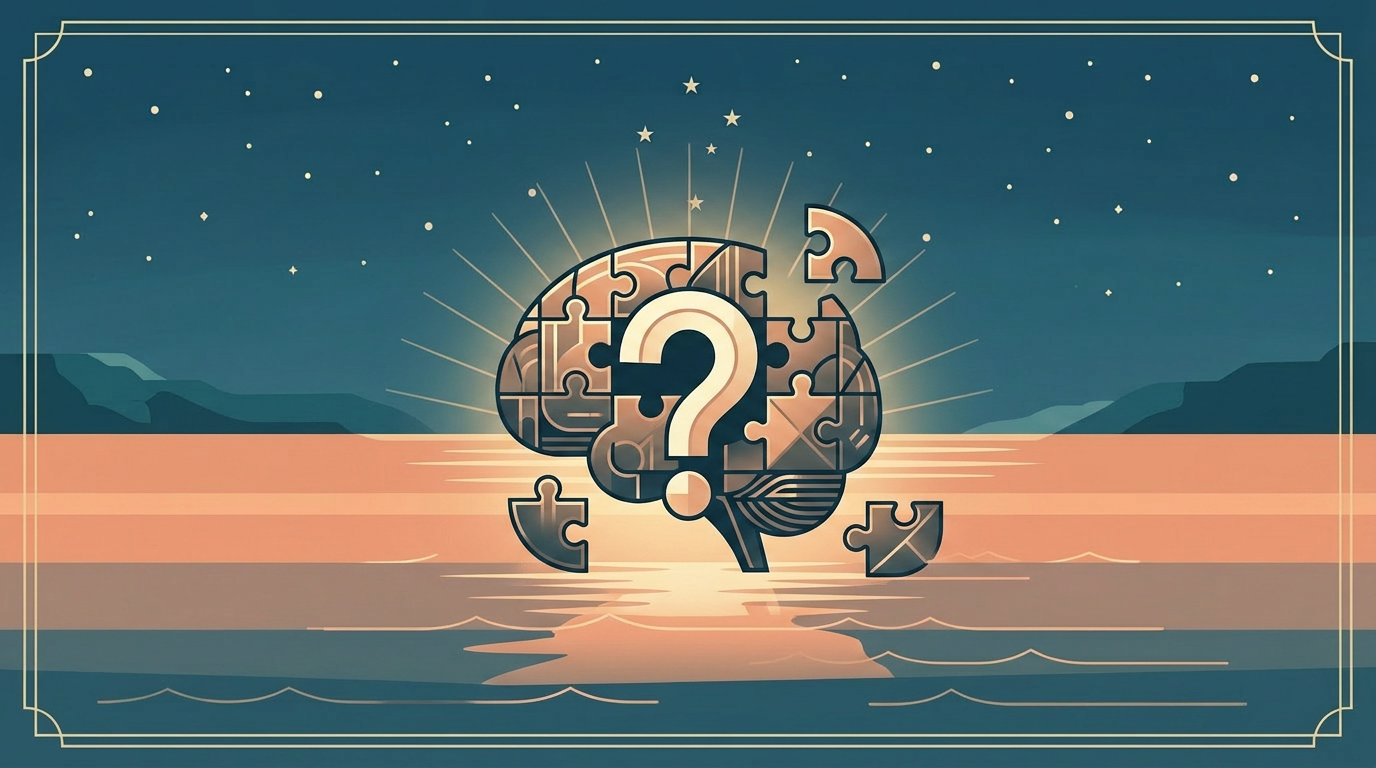
One of the most useful things I picked up in 2025 was not a tool or a model. It was a framework, from a workshop with Dr Arthur Brooks, a Harvard professor who studies human happiness. He uses it to talk about leadership. I use it almost every week when a Coast business owner asks me, "Should I get AI to do this?"
It comes down to two words that sound similar and mean very different things: complicated and complex.
Complicated, and complex
Complicated problems are difficult, but they have a right answer. They yield to analysis, logic, expertise and the right tool. Scheduling, drafting, summarising, cross-referencing, calculating, reconciling, tagging, sorting. Hard work, but the answer is in the data if you look properly.
Complex problems are different. They do not have a right answer that a machine can compute. They involve people, relationships, judgement, trust, values and meaning. Should we keep this long-standing client now that they have stopped paying on time? Is our newest apprentice ready to be on a job by herself? How do we tell a customer something has gone wrong without losing them?
Professor Brooks puts it directly: AI is the ultimate left-brain device. Outstanding at the complicated. Categorically unsuited to the complex.
Never solve a complex need with a complicated tool.
That sentence has sat on a sticky note above my desk for the better part of a year. It is the single most useful lens I have found for AI adoption inside small business.
What this looks like in a Coast business
Think about a week inside a typical Erina accounting practice. Reconciling transactions, chasing missing receipts, drafting the same kind of letter to the ATO for the fifteenth time this month, formatting a quarterly BAS pack. All complicated. All candidates for AI to take a real swing at, with the accountant reviewing.
Now think about a different conversation in the same practice. A long-standing client whose business is in trouble. A staff member who is burning out. A decision about whether to take on a new partner. All complex. None of those belong anywhere near a chat window for the decision itself, although AI might help you prepare for the conversation.
Same pattern in a Woy Woy trade business. AI is a great fit for triaging the inbox, drafting a confirmation, building a quote off a template, chasing an overdue invoice. AI is a poor fit for deciding which apprentice to let go, how to handle a customer dispute on a job that went sideways, or whether to take on a job that smells wrong on the phone.
Why the data itself demands human judgement
There is a second reason this matters, and it sits inside the technology itself. AI models are trained on historical data, gathered from a different time, reflecting the patterns of who was included and who was not.
If you ever wonder why this matters for a small business, consider hiring. Any AI tool used in shortlisting draws on historical hiring data, which carries the preferences, conscious and otherwise, of whoever made those decisions before. The model treats underrepresentation as evidence of unsuitability, when it is actually evidence of exclusion. Asking a model to "recommend the best candidate" without a person actively interrogating that output is exactly the kind of complex decision being handed to a complicated tool.
Recognising where the data came from, questioning what it leaves out, and deciding what the right answer is for this person in this role: that is work for a human, every time.
The point isn't to do less. It's to spend the time better.
The other half of Brooks' point is the optimistic one, and I keep coming back to it.
If AI is well-suited to complicated work, and your team spends meaningful time on complicated work, then every hour reclaimed from that pile is an hour available for the complex work that only the people in your business can do. Time with customers. Time with apprentices. Time thinking about where the business is going next.
That is the actual prize. Not "do everything with AI". It is "let AI carry the complicated, so the humans can carry the complex".
A simple test before you automate anything
Before you reach for a tool, ask one question about the task in front of you.
Is this a complicated problem, or a complex one? Is it analysis and computation, or is it judgement and relationships?
If the honest answer is complicated, AI belongs in the conversation. Build the workflow. Keep a human in the review loop. Get the time back.
If the honest answer is complex, the question changes. What does this situation need from a person? Sit with that. AI may help you prepare. It does not get to make the call.
The Coast businesses I see doing AI well are not the ones doing the most with it. They are the ones who are clear about which side of the line each decision lives on, and who refuse to confuse the two. Our Blueprint is where that line gets drawn for your specific operation.
If you want a hand drawing that line for your own business, the Find your AI quick wins email is the start of that conversation.
Framework adapted from the work of Dr Arthur C. Brooks, Harvard Kennedy School and Harvard Business School.